
Rack & Pinion Pneumatic Actuator
Overview
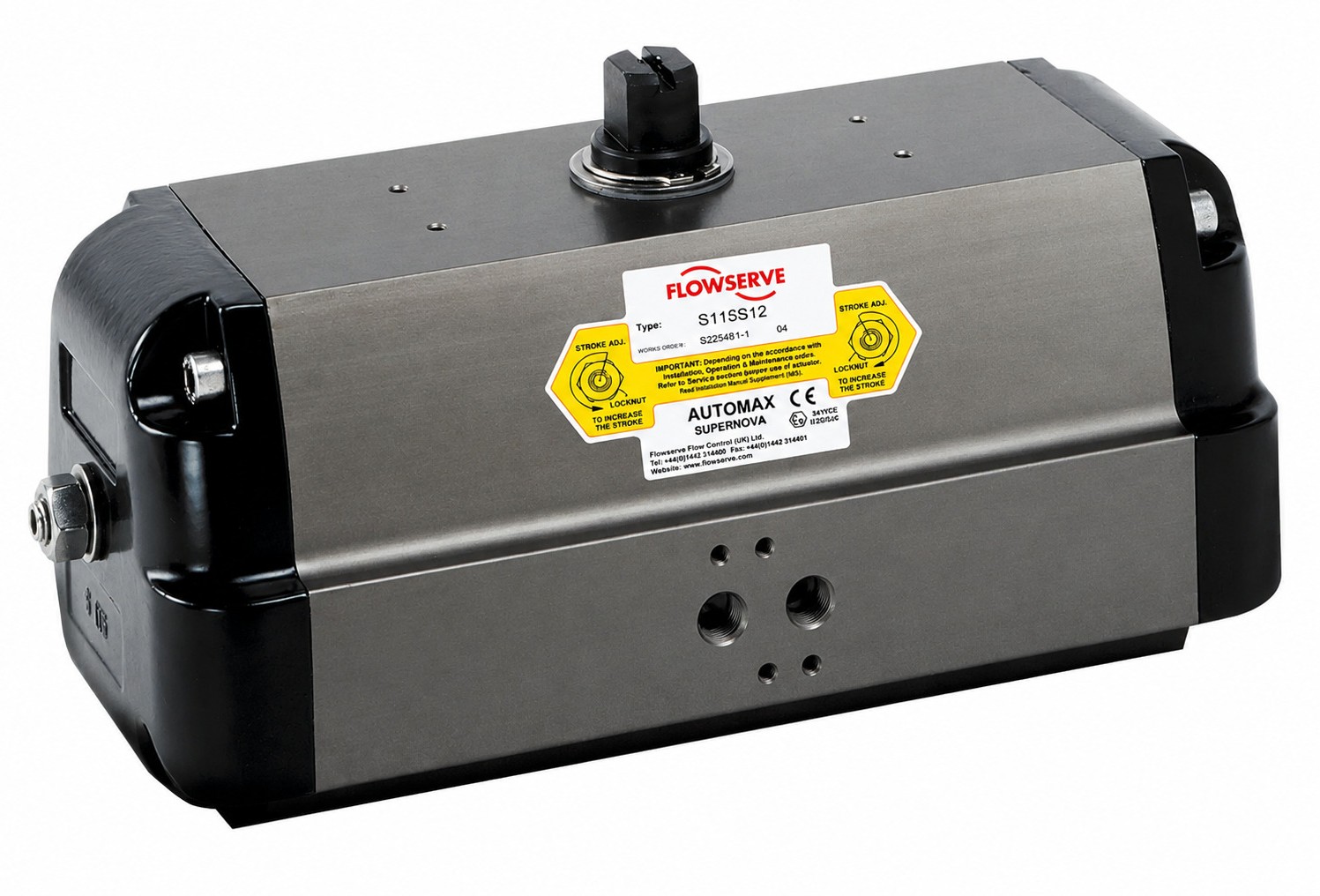
As a member of Flowserve's Design to Value (DtV) team, I participated in a strategic value engineering project focused on one of the company's rack & pinion pneumatic actuator families. The objective was to significantly reduce manufacturing costs in order to strengthen the product's market position while maintaining compliance with industry standards.
The project combined structured value engineering, competitive benchmarking, product redesign, and cross-functional collaboration over a two-year development period. After the concept phase, I became the engineering lead responsible for coordinating the mechanical development of the redesigned actuator family, working closely with subject matter experts in the United Kingdom.
Project Development
Flowserve's DtV initiative applied a structured value engineering methodology that brought together engineering, product management, sales, manufacturing, quality, and supply chain specialists to identify opportunities for reducing cost while increasing customer value.
An important part of the project was competitive benchmarking. Together with the team, we analysed publicly available information and performed teardown studies of competitor products to better understand different design approaches. We also reviewed an earlier, unimplemented value engineering study prepared by the UK engineering team, using it as a foundation while developing new concepts.
The benchmarking revealed that our actuator incorporated several customer-valued features that required a significantly more complex construction than similar products on the market. Since these features were not required to satisfy industry standards, we decided to simplify the design and focus on delivering the required functionality through a simpler and more cost-efficient design.
Product Redesign
The actuator was redesigned by simplifying the product, reducing part count, and improving manufacturability while maintaining compliance with the applicable industry standards. I was responsible for the complete CAD development of the baseline actuator size, which served as the foundation for the redesigned product family.
Prototype units of the redesigned baseline actuator were manufactured and successfully completed the planned validation testing, confirming that the concept met the required functional and performance criteria.
Following successful validation, I coordinated the engineering effort to apply the redesigned architecture across the remaining actuator sizes. Working closely with other engineers, I ensured that the design changes were implemented consistently throughout the product family while remaining practical to manufacture and assemble.
Engineering Evaluation
With the technical objectives achieved, the project entered an evaluation phase to assess whether the redesign also met the overall business objectives. During this evaluation, it became clear that the estimated manufacturing cost reduction remained below expectations.
Further analysis revealed that the original benchmarking approach compared actuator sizes directly based on cylinder bore diameter. This proved to be a misleading comparison, as the competitor's actuators generated higher torque within the same size envelope. This allowed customers to select smaller actuator sizes for many applications, creating a cost advantage that could not be eliminated through product redesign alone.
This finding fundamentally changed our understanding of the problem. Rather than focusing solely on simplifying the existing product, the analysis demonstrated that expanding the actuator size range with additional intermediate sizes would allow products to be matched more closely to customer torque requirements, offering a significantly greater opportunity to improve competitiveness.
Outcome
The project demonstrated that simplifying the product architecture could significantly reduce complexity, part count, and manufacturing effort. More importantly, it showed that understanding a product's market position requires looking beyond the design itself and considering the broader product portfolio and customer application requirements.
Although the redesigned actuator successfully met its technical objectives, the engineering evaluation showed that expanding the product family offered a greater opportunity to improve the product's market position than implementing the redesign alone. As this represented a broader product portfolio decision, the project concluded before production implementation.
The project provided invaluable experience leading engineering activities within a multidisciplinary value engineering initiative. It also strengthened my skills in structured problem solving, cross-functional collaboration, and translating business objectives into practical engineering solutions.